

The significant key to getting healthy and monitoring your exercise , your heartbeat describes the number of times your heart beats per minute. While apparently fundamental, your heartbeat can actually offer you a phenomenal quantity of insight into your general wellness, cardiovascular fitness, endurance and much more.
Even when you’re not a severe or elite athlete, knowing your heart rate can assist you ascertain appropriate intensity levels to your workouts and be sure that you consistently get the absolute most from your workouts.
As per Cardiologist Humble, understanding and tracking your heart rate will be able to help you spot existing or current health complications, like arrhythmias (irregular heart rhythms) or tachycardia (remarkably large heartbeat ).
Here are steps to determine your heart rate
There are four different heart rate measurements you ought to know about. All of them have some location in tracking fitness and healthcare, but your resting pulse and maximum heart rate would be both main.
Resting heart rate
Your resting heart rate is the pace at which your heart beats whenever you’re doing nothing. If you are not exercising or moving about, your heart is pumping the smallest quantity of blood you want to endure and fuel your body.
The typical resting heart rate is 60 to 80 beats per minute. This varies, however: It’s usually lower for men and women who exercise frequently, and greater for men and women that are relatively sedentary. Resting heart rate also frequently rises as you get old, once you’re sick and if you are anxious or stressed.
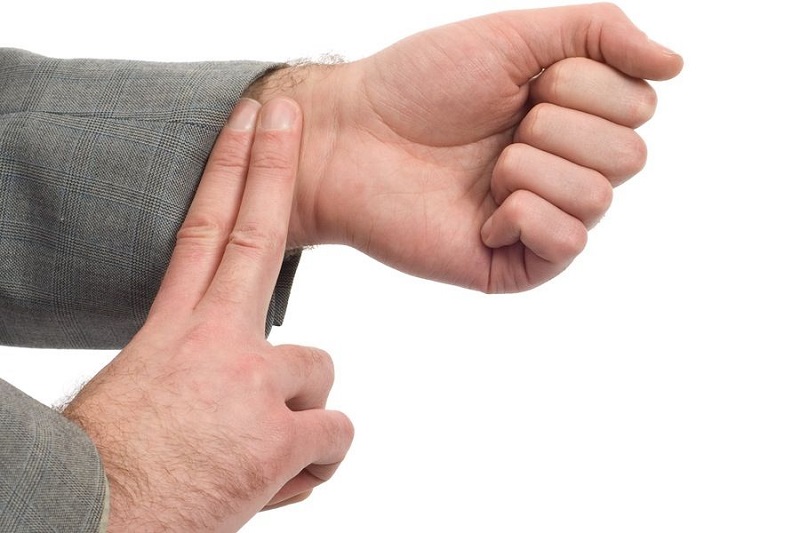
To ascertain your resting heartbeat the old-school manner, just count how often your heart beats in a minute. Your reading will probably be accurate if you measure it in the morning before you escape bed.
Pick a place at which you’ll be able to feel your heartbeat. The best places to locate your pulse are in your own wrists, the interiors of your elbows, the tops of your toes and the side of your neck, just beneath your jaw.
Put two fingers on the pulse location, and count the amount of beats you feel in 60 minutes.
Use a stopwatch in this procedure since it is not likely you’ll have the ability to count both pulse and the moments in mind. Counting for a whole 60 seconds will offer the most precise result, however, you might also count for 30 minutes and multiply that amount by 2.
By way of instance, if I rely on 30 stimulation in 30 minutes, then I would multiply that by 2 to receive 60 for my resting heartbeat.
Maximum heart rate
Your maximum heart rate is a measure of your heart’s greatest beats each minute. The ordinary max heart rate varies considerably based on age, fitness level and other elements, such as medical genetics and conditions.
The simplest way to gauge your maximum heart rate is a simple math calculation. Subtract your age from 220 to find an age-predicted maximum heart rate.
The 220-minus-age formulation is the conventional method of measuring maximum heart rate, and it is still widely used.
Heart rate reserve
Heart rate reserve denotes the gap between your heart rate and your resting heartbeat. Heart rate book is most frequently utilized to gauge an individual’s perfect training zones — high level athletes utilize these zones to maximize their training.
To quantify heart rate book, follow these steps:
Determine your resting heart rate using the procedure above or utilize info from an action tracker or alternative apparatus (more on these below).
Estimating max heart rate by subtracting your age from 220.
Subtract your resting heart rate in the maximal heart rate to find out your heart rate book.
By way of instance, my resting heart rate is 58 beats per second, depending on the average my Fitbit provides me. My maximum heart rate is 198 (I am 22 years old, therefore I utilized 220 without 22).
My heartbeat reserve — maximum heart rate minus resting heart rate (198 minus 58) — is 148.
Goal heart rate
Goal heart rate is frequently used interchangeably with heartbeat books as they’re used for similar functions, but they are actually different. Your target heart rate is usually defined as 50 to 85 percent of your maximum heart rate, and this variety is regarded as the very best fat-burning range for workout.
50 to 70 percent of your maximum heart rate represents moderate-intensity exercise, and 70 to 85 percent signifies vigorous intensity exercise. To find your target heart rate, simply multiply your maximum heart rate by 0.50 and 0.85.
Case in point: My maximum heart rate is 198 (dependent on the 220-minus-age formulation ).
198 x 0.50 = 99
198 x 0.85 = 168.3
My goal heart rate during workout is 99 beats a minute and approximately 170 beats per minute. Remember that perfect training zones differ from person to person.
For example, I understand I can exercise consistently at the top end of my target heart rate , but I have been operating long distance and performing CrossFit for several years. A novice should begin in the lower end of the target heart rate range and increase the intensity as their fitness improves. I hope you like reading this article.
