

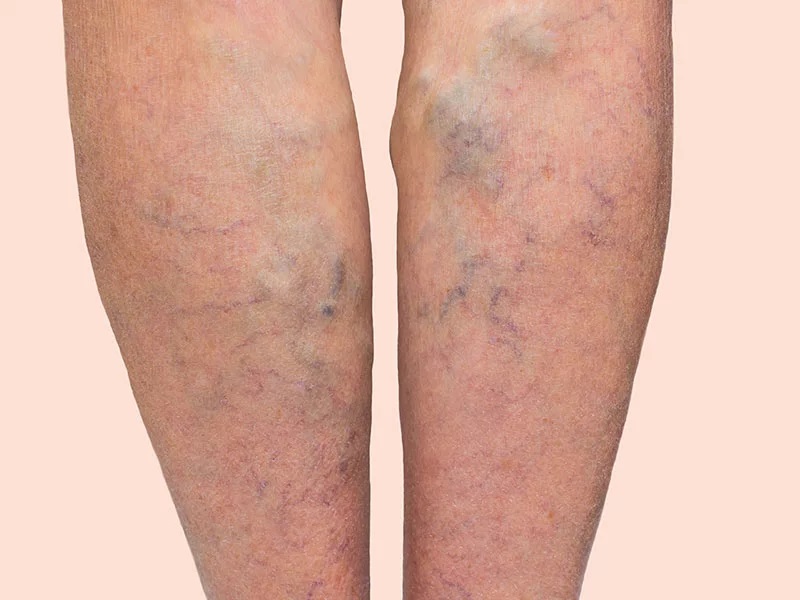
Varicose veins are characterized by abnormal thickening and enlargement of veins. The veins become twisted and protrude from beneath the skin.
Varicose veins can affect any part of the body, but most commonly this condition affects the veins located on thighs and legs.
Inheritance plays a major role in varicose veins. The condition becomes grave with advancing age.
Symptoms of varicose veins
The symptoms of varicose veins can just be a cosmetic concern for some people, but in some cases, the symptoms can be severe causing pain and discomfort to the sufferer.
The symptoms are:
- Pain and discomfort
- Feeling itchy or heavy
- Cramps at night
- Increase in pain and discomfort on prolonged standing
Causes of varicose veins
- Age
One of the leading causes of varicose veins is age. As a person ages, he or she tends to lose the elasticity of the blood vessels. The valves in the vessels become weak and as a result, the blood that should ideally move against gravity to reach heart flows back. Blood pool in the veins and this results in varicosities. The veins get enlarged. As the blood is deoxygenated, the veins appear purple or blue.
- Pregnancy
Pregnancy can also be a cause of spider and varicose veins. During pregnancy, the volume of blood increases, but theflow of blood from lower extremities to pelvis drops down. This causes an abnormal enlargement of the veins of the legs.
During the late pregnancy, when the uterus exerts pressure on the legs, the condition of the veins mayworsen. Hormonal changes during pregnancy also contribute to varicose veins.
Generally, no treatment is given to the patient as the condition betters within three to twelve months post delivery.
Risk factors involved in varicose veins
The risk factors for varicose veins include:
- Age: The susceptibility to varicose veins increases with advancing age.
- Family history: If someone from a family has varicose veins, other members are also likely to develop the condition.
- Gender: Women are more susceptible to varicose veins as compared to men. Hormonal disturbances during pre-menstruation, pregnancy, or menopause can contribute towards the development of varicose veins. Also, taking birth control pills or hormonal therapy enhances the chances of varicose veins.
- Long periods of standing or sitting: Prolonged periods of standing or sitting do not allow optimum blood flow contributing towards increased risk of varicose veins.
- Obesity: Obesity enhances the pressure on the veins of lower extremities increasing the risk of varicose veins.
Complications of varicose veins
Some rare complications can accompany varicose veins. They include:
- Painful ulcers on the skin surrounding varicose veins
- Bleeding from the varicose veins
- Blood clots in the varicose veins. The condition is called thrombophlebitis.
Prevention of varicose veins
- Exercising regularly is one way of preventing the occurrence of varicose veins.
- Taking a diet that is high in fiber and low on salt also helps in preventing this condition.
- Maintaining a stable weight reduces the chances of varicose veins.
- Avoiding periods of long standing or seating also helps in decreasing the chances of varicose veins.
Treatment of varicose veins
Self-care is indicated generally. Severe cases or cases with complications may involve surgical treatment.
