

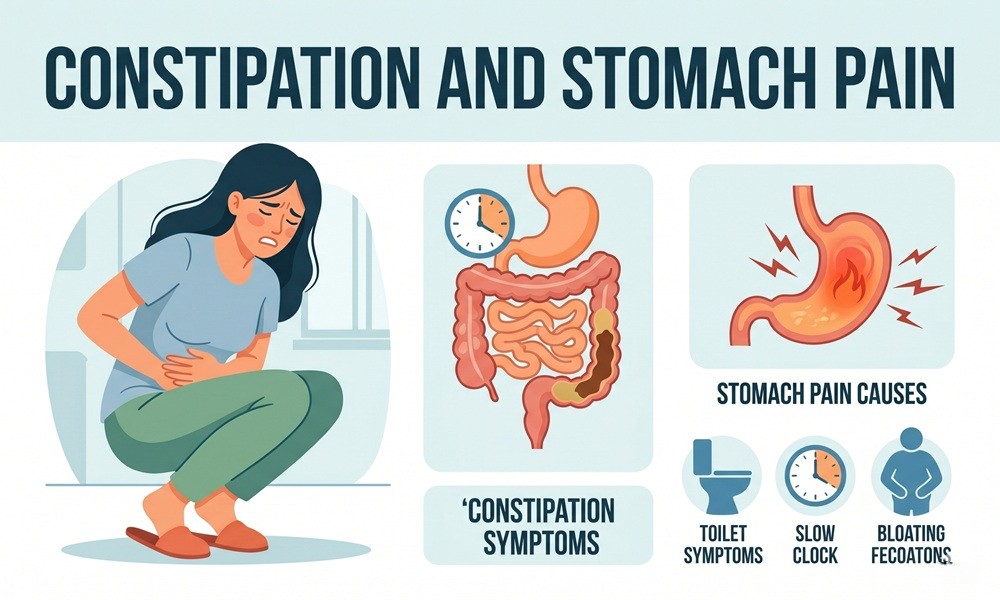
Constipation affects around 16% of adults globally, and it is nearly twice as common in women as in men. When constipation combines with stomach pain, it can seriously disrupt daily life – and knowing what’s actually going on makes a real difference in how you treat it.
What Is Constipation, Exactly?
Medically, constipation is defined as having fewer than 3 bowel movements per week, with stools that are hard, dry, or difficult to pass. Other signs include:
- Feeling of incomplete emptying after a bowel movement
- Straining excessively
- Needing to use manual maneuvers to help pass stool
- Bloating and abdominal discomfort
Occasional constipation is normal. Chronic constipation (recurring regularly) needs attention.
Why Does Constipation Cause Stomach Pain?
When stool sits in the colon for too long, a few things happen:
- Gas buildup – bacteria ferment the stool, producing gas that causes pressure and cramping
- Bowel spasms – the colon contracts trying to move the stool, causing pain
- Distension – a backed-up bowel stretches the intestinal walls, causing a dull, heavy ache
- Pressure on surrounding organs – severe constipation can cause referred pain in the lower back, pelvis, and even shoulders
The location of pain matters. Lower left abdominal pain is most commonly constipation (where the sigmoid colon sits). Central or diffuse abdominal pain can also indicate constipation, gas, or IBS.
Most Common Causes of Constipation
Dietary Causes
- Low fiber – the recommended daily intake is 25g for women and 38g for men; most people get far less
- Low fluid intake – the colon absorbs water from stool; dehydration makes stools rock-hard
- High intake of processed foods – low in fiber, high in fat, slows gut motility
Lifestyle Causes
- Sedentary behavior – exercise literally moves the bowel; sitting all day slows it
- Ignoring the urge – repeatedly delaying a bowel movement weakens the reflex over time
- Travel or routine disruption – changes in schedule confuse the gut clock
Hormonal Causes
- Menstrual cycle – high progesterone before a period slows gut motility
- Pregnancy – progesterone effect plus physical compression of intestines
- Hypothyroidism – an underactive thyroid dramatically slows gut function
- Perimenopause and menopause – hormonal shifts affect the bowel
Other Causes
- Stress and anxiety (the gut-brain axis is powerful)
- Certain medications (opioids, iron supplements, antidepressants, antacids)
- IBS with constipation (IBS-C)
- Conditions like celiac disease, diabetes, or neurological disorders
How to Relieve Constipation and Stomach Pain at Home
Immediate relief:
- Drink warm liquids – warm water with lemon or herbal tea in the morning stimulates the gastrocolic reflex
- Move your body – even a 10-minute walk stimulates bowel movement
- Try a squat position – a footstool under your feet while on the toilet mimics the natural squatting posture and makes evacuation easier
- Abdominal massage – massage in a clockwise direction (following the path of the colon) to move gas and stool along
- Osmotic laxatives – magnesium citrate or polyethylene glycol (Miralax) are gentle and effective options
Long-term prevention:
- Gradually increase fiber to 25-38g/day (sudden changes can worsen bloating)
- Drink 2-2.5 liters of water daily
- Establish a regular bowel time (morning after breakfast is ideal – the gastrocolic reflex is strongest)
- Manage stress with regular movement, sleep, and relaxation practices
When to See a Doctor Urgently
Go to a doctor if you have:
- Blood in your stool – always needs investigation
- Constipation lasting more than 3 weeks without improvement
- Sudden, severe abdominal pain alongside constipation
- Unexplained weight loss
- New constipation after age 50 – needs screening for colorectal issues
- Alternating constipation and diarrhea (can indicate IBS or IBD)
Key Takeaways
- Constipation and stomach pain are closely linked – gas, bowel spasms, and intestinal distension are the main pain drivers
- Low fiber, dehydration, inactivity, hormonal changes, and stress are the most common causes
- Warm liquids, movement, squatting posture, and osmotic laxatives offer fast relief
- Persistent or severe constipation with any alarming symptoms needs medical evaluation
