

Vitamin D deficiency is one of the most common nutritional problems in the world. And for those eating a plant-based diet, the risk is even higher – because almost every natural food source of vitamin D is animal-based.
The good news is that plant-based vitamin D options have improved significantly, and knowing which ones to choose makes a huge difference.
Why Vitamin D Is So Important
Vitamin D is a fat-soluble vitamin that functions more like a hormone than a traditional nutrient. It plays a critical role in:
- Bone health – helps the body absorb calcium and phosphorus
- Immune function – regulates immune response
- Mood and mental health – low vitamin D is linked to depression
- Muscle strength – particularly important as you age
- Heart health – supports blood pressure regulation
Vitamin D deficiency is estimated to affect up to 41% of U.S. adults – and among vegans, levels tend to be even lower because dietary sources are almost exclusively animal-derived.
The Two Forms of Vitamin D: D2 vs D3
This is the most important thing to understand about plant-based vitamin D.
| Feature | Vitamin D2 (Ergocalciferol) | Vitamin D3 (Cholecalciferol) |
|---|---|---|
| Source | Plants, yeast, fungi | Sunlight, animal products, lichen |
| Absorption | Lower | Higher |
| Raises blood levels | Less effectively | More effectively |
| Vegan? | Yes (most sources) | Only if from lichen or algae |
| Half-life in body | Shorter | Longer |
Research has consistently shown that D3 is more effective than D2 at raising and maintaining blood levels of the active form of vitamin D (25-hydroxyvitamin D). One study found vitamin D3 was about 87% more potent at raising blood levels compared to D2.
For years, D2 was the only vegan option. That changed when lichen-derived D3 became commercially available.
What Is Lichen-Based Vitamin D3?
Lichen is a unique organism formed from algae and fungi living symbiotically. When exposed to sunlight, lichen naturally produces vitamin D3 – the same form your skin produces when you go outside.
Vegan D3 from lichen is chemically identical to animal-derived D3. Once it’s in your body, there is no difference. It is the first vitamin D3 source approved by the Vegan and Vegetarian Society.
When shopping for supplements, look for:
- “Vegan D3”
- “D3 from lichen”
- “Vitashine” (a well-known lichen-based D3 brand ingredient)
Avoid gummies that use gelatin as the capsule base – that’s not vegan even if the D3 itself is.
Plant-Based Food Sources of Vitamin D
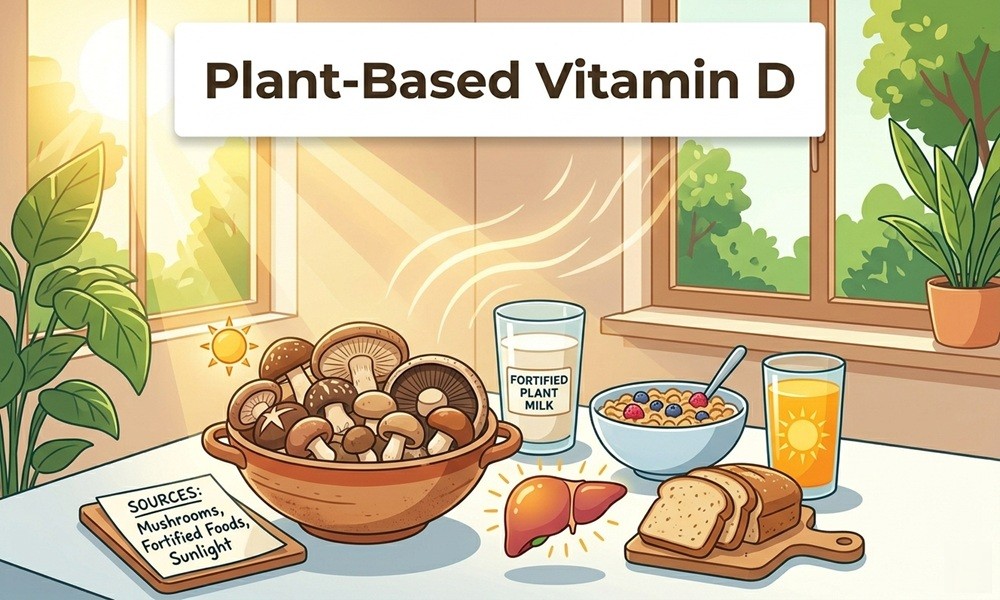
Plant foods contain very little vitamin D naturally. The main exception is UV-exposed mushrooms.
Vitamin D from Mushrooms
Certain mushrooms can produce significant vitamin D2 when exposed to UV light:
- Maitake mushrooms – one of the highest sources
- Portobello mushrooms – place gill-side up in direct sunlight for 15-30 minutes to boost vitamin D content dramatically
- Dried shiitake mushrooms – sun-dried versions contain more than indoor-grown
No other plant food comes close to these amounts, but mushrooms alone are unlikely to meet your daily needs.
Fortified Foods
Many plant-based products are fortified with vitamin D:
- Plant milks (soy, oat, almond)
- Fortified cereals and orange juice
- Some tofu products
Always check the label – not all plant milks are fortified equally.
How Much Vitamin D Do You Need?
| Group | Recommended Daily Intake |
|---|---|
| Adults 19-70 | 600 IU/day (minimum) |
| Adults 70+ | 800 IU/day |
| Deficiency correction | 1,500-2,000 IU/day |
| Upper safe limit (no supervision) |
Note: The Endocrine Society recommends 1,500-2,000 IU/day to correct a deficiency. Always get your 25(OH)D blood level tested to know your actual status before high-dose supplementing.
Who Is Most at Risk of Vitamin D Deficiency on a Plant Diet?
- People with darker skin tones (require more sun exposure to produce the same amount)
- Those living at higher latitudes or in cloudy climates
- People who work indoors or cover their skin
- Women during perimenopause and postmenopause (critical for bone health)
- People with malabsorption issues (IBS, celiac disease, Crohn’s)
Key Takeaways
- D3 is significantly more effective than D2 at raising vitamin D levels
- Vegan D3 from lichen is the gold standard for plant-based supplementation
- UV-exposed mushrooms are the best whole-food plant source, but supplements are usually needed
- Get your blood levels tested – deficiency is very common and often goes undetected
- Pair vitamin D with a fat-containing meal for better absorption (it’s fat-soluble)
